


I traveled much of Europe before ever making it to Portugal, and during that time, I was regularly greeted with gasps of shock and horror that I still had yet to visit Portugal.
“It’s my FAVORITE place in Europe!”
“If you love Spain, you’ll love Portugal even more!”
Naturally, my curiosity was piqued, and my expectations were set high. Which is dangerous territory, because the second you start curating imaginative portrayals of what a place should look like, based purely on the rabid praises of other people, that place becomes idealized. Andddd if the real thing doesn’t live up to that, you end up disappointed.
During my time spent in Portugal, I was disappointed at times. Not in Portugal itself, but in the general tourist experience. Nonetheless, it made me think a lot about the impact of visitors and the multiple nuances of sustainable, immersive tourism.
By no means is this my critique and distaste for Portugal. I loved Portugal. I spent a month volunteering in the rural countryside of Portugal at a quaint guesthouse run by the cutest Portuguese couple. I worked closely with the small team of staff, picked tomatoes and persimmons from their gardens, celebrated birthdays in intimiate family-like style, ate traditional food like bacalao, arroz doce and many a soup, practiced Portuguese with 77 year old Senor Jose who built the entire guesthouse from the ground up with his bare hands, and bellowed out, “America!” every time he saw me.
Contrast that to my time after, spent visiting highly urbanized Porto and Lisbon, where the invitation to connection and immersion felt cursory rather than deliberate. I liked Lisbon; I was disappointed by Porto. Not that Porto isn’t a beautiful city, it certainly is, but nothing about the city center felt authentic. In fact, it reeked of tacky tourists on every street. Commercial clothing stores, overpriced flea markets, cafes, and souvenir shops on every corner. To even stroll down a road frustrated me, because I’d get boxed in by swamps of inefficient walkers. Porto is a relatively small city, and it felt like one incongruous modgepodge of tourism. Which one might say “duhhh” to, as it is a cool city in a cool country where tourism is very popular. Correct.
Extractive Tourism
Tourism is a major contributor to Portugal’s economy. It accounts for over 21% of the total GDP and represents 23% of all employment. However, that economic prosperity comes with one of the most unequal wealth distributions in all of Europe. The average income in cities is 35-40% higher than in rural areas, and 83% of the country’s wealth is concentrated in coastal areas.
And although tourism is vital to Portugal’s economy, it is also inevitably extractive. Extractive tourism is a term coined by researcher Vijay Kolinjivadi, in which he analogizes the tourist industry to the mining industry. In his words, extractive tourism is where a resource has been identified at a particular site - a building, nature, or some other type of uniqueness - and the site becomes all about the extraction of the tourism value. High tourism to a site leads to degradation of cultural and natural resources, implying that the act of simply visiting a new place comes with an innate impact or exploitation.
The opposite of this would be additive tourism, which I am not sure is possible. So perhaps the best alternative is to strive for minimally extractive, more sustainable tourism - right?
Heritage Tourism
One method I kept seeing for (more) responsible, less extractive tourism is through “heritage tourism”. This involves the intentional preservation or revitalization of historically or culturally significant sites to maintain cultural authenticity for both the community and visitors. As more travelers seek personal, intimate experiences with new cultures, heritage tourism is becoming increasingly attractive. It’s often viewed as a sustainable alternative to large-scale commercialized tourism because revenue from heritage tourism helps regenerate abandoned or decaying sites for future generations to enjoy.
So yes, it can be “additive” by encouraging projects focused on preservation. But it can also be extractive, by damaging cultural and natural resources for the tourist’s benefit, regardless of how well-intentioned the tourist may be.
There are already a few efforts happening in Portugal for heritage tourism. Village tourism projects to revive Portugal’s abandoned rural villages into new homes or art studios.
Surprisingly or unsurprisingly, one of the most touristic cities I’ve ever been to, Porto, is a UNESCO World Heritage site as of 1996! Because of its historic buildings, the Luiz Bridge, monuments, medieval streets, and the overall evolution of it as an urban city over hundreds of years
These are great efforts; however, the BIG conundrum with heritage tourism is that when we, as reverent visitors, come genuinely seeking a cultural connection, we still consume that place as a commodity and gulp down its transactional service to us. So how authentic is that? How sustainable is that?
The Porto Problem
Back to sweet ol’ Porto. Porto was never really a hyped tourist destination until after its UNESCO designation, which brought about urban regeneration projects and, of course, lots of people. Throughout the 2000s, the city underwent a large revitalization of some of its run-down, forgotten cultural sites. Foreign and private investments poured funding towards these projects, growing Porto’s charm, modern urban development, and its global desirability as a top tourist destination in Europe.
But as the city center of Porto flourished, so did the attraction to visit, and it became increasingly easier for outsiders to come. Cheap airlines and short-term rentals brought about easier access to European travel. Portugal also implemented its Golden Visa policy in 2012, providing residence permits to foreigners if they invested back into the country. All these factors led to a surplus of short-term residents and a decline in long-term residents, as the cost of living steadily increased.
20 years after its UNESCO designation, Porto lost over half of its residents. In 2023, the total number of overnight stays of guests in Porto was 6 million, while the total number of permanent residents in the city stood at around 200,000.
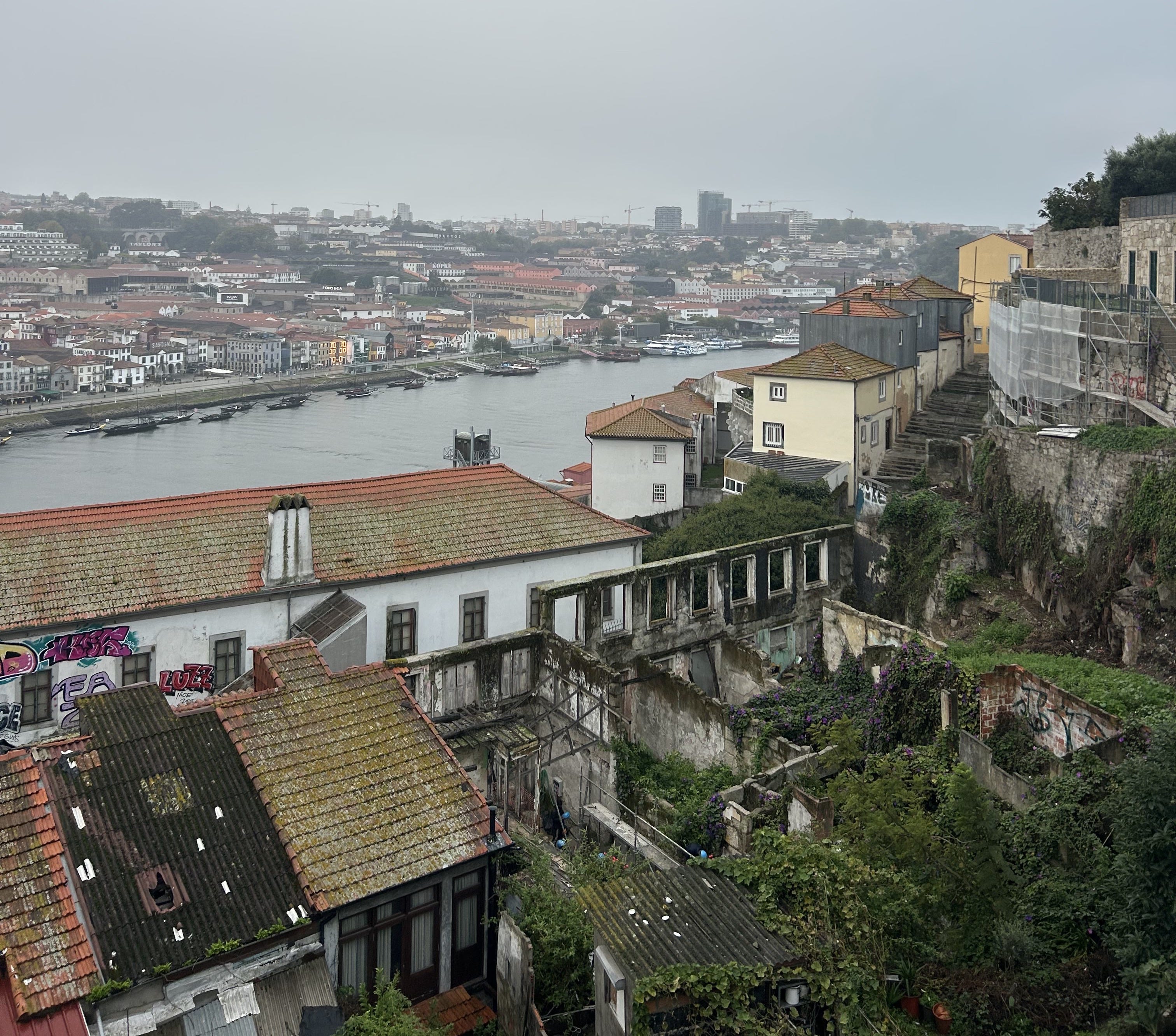
Although much of Porto’s center has been constructed with historical preservation in mind, it still inevitably faces commercialization as tourist pressure increases. Small mom and pop stores are replaced with gaudy souvenir stores, traditional restaurants are replaced with sterile overpriced coffee shops, sign after sign of pastel de natas - It’s everything that looks like it screams culture, but is really just tourist aesthetics. Historic charm may be preserved, but in a way that caters to tourist satisfaction, not in a way that retains its true essence.
Facadism & the Commodification of Everything
Tourists want to feel the culture of a place, and they have an idea of what that culture should feel like, from social media, travel videos, magazines, etc. That “idea” of a place that we devise up in our minds influences our direct experience with it. It makes us interested in going there to see it, take a picture of it, and pay someone some money to do it. This is the development of modern society.
A fascinating article I read recently used Guy Debord’s philosophical, Marxism-inspired critique of society, Society of the Spectacle, as a lens for viewing modern-day heritage tourism. In his book, Debord describes how modern-day capitalism has replaced genuine, lived experiences with an image or representation. Life has been replaced by representations, and everything is turned into a commodity. Rather than experiencing or living something directly, people passively consume mediated versions or images of it, which is all operated by the powerful market economy.
Debord argues that this commodification obsession also exists in our relationships with other people and has moved us away from real, authentic social relations, ultimately leaving us to feel alienated (worth mentioning that Debord wrote this in 1967, and I think his theory is scarily even more apparent today, with social media and wildly unchecked consumerism everywhere).
In modern urban heritage preservation, Debord’s theory can be applied to the concept of “facadism”. Facadism was a new term to me, but it is a relevant concept across all countries, not just Portugal. It indicates the process by which an old historic building undergoes interior demolition, and all that is left behind is the outline (or facade) of its original structure.
Oftentimes, the insides are transformed into new hotels, apartments, or restaurants. While it may seem on the surface that the building is preserved, it’s partly an illusion as the interior essence has been gutted out and replaced with… can you guess… commodities! Commercialization! And you know what our wisely philosophical friend, Guy Debord, would call this… A spectacle. A modern-day capitalist spectacle.
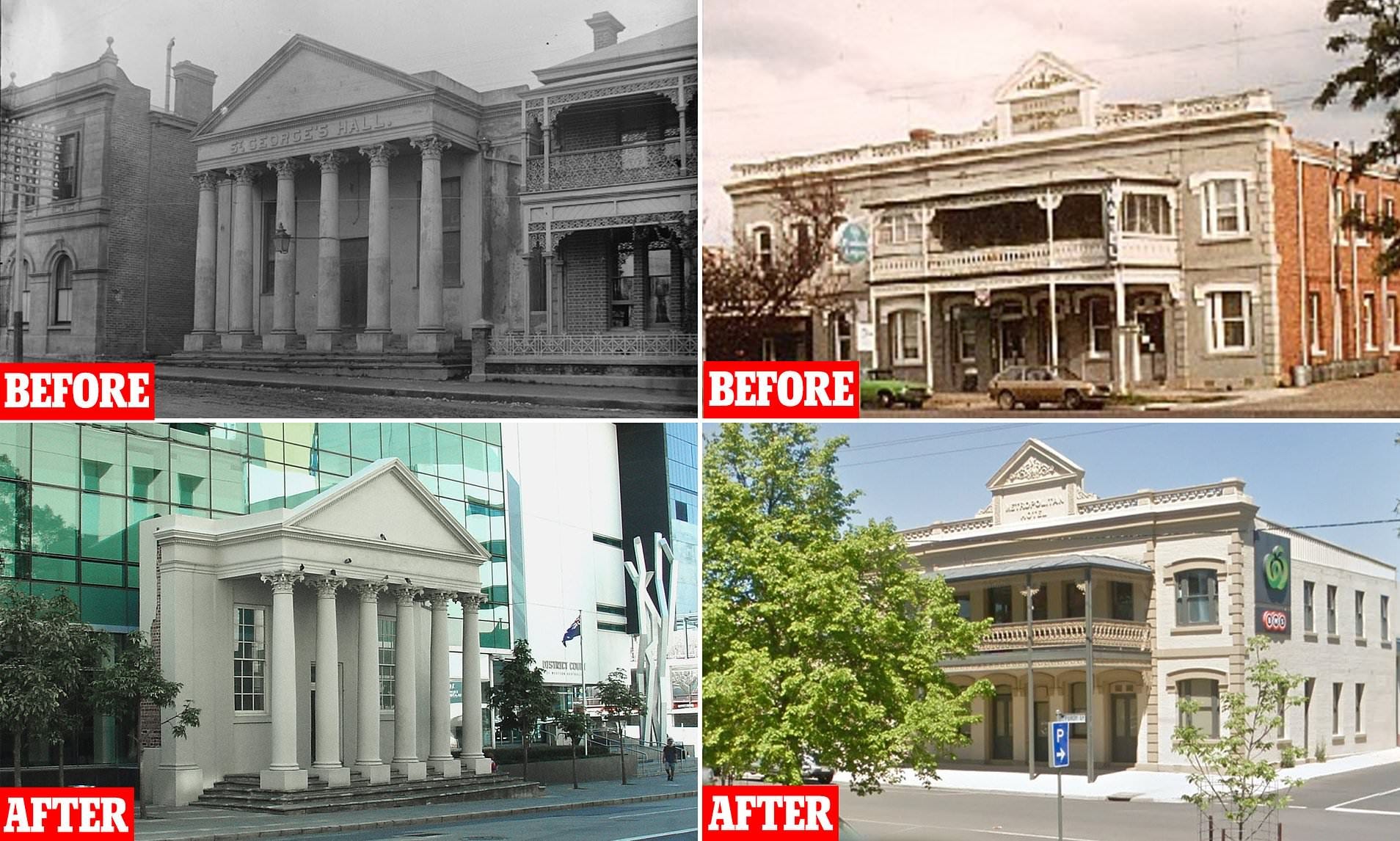
The remaining facades are the representation by which visitors come and consume. Landscapes or cultural sites relating to heritage tourism are nothing but a backdrop, an “inverted image” in which commodity relationships replace real human relationships.
As argued in that same article, the very interventions that seek to build out a city’s urban heritage end up stripping away the “rich historical layers and architectural complexities of heritage”. After, what is left behind is a “superficial, cheerful, and colorful facade resembling a tourist postcard”. It’s a deceitful type of preservation. One for visitors to look at, feel satisfied by, and move along to spend their money on the modern amenities and activities that await them behind the facade.
Porto’s Facadism
Porto is no stranger to facadism. Its central area, Cardosas, holds buildings and structures dating back to the 15th century. Many of these structures have undergone partial demolition, where the inside of the building was turned into modernized luxury hotels, and the outside of it was kept in its original form to “respect” its heritage.
But how respectful is this to the authentic heritage, if the insides, arguably the architectural heart of it, are completely torn apart? And not just torn apart, but renovated for the sole purpose of tourist accommodation - more rooms, more shops, more restaurants, more more more. Not to mention, with the new development in Cardosa, local traders and workers have been gentrified and expropriated, without any helpful treatment.
In 2018, a new development project of a 5-star giant hotel was built around a historic 120-year-old cafe (whose interior structure was dismantled), in an effort to include the cafe’s facade, to enhance the overall historic charm of the new luxury hotel. The hotel has 90 rooms and six thematic floors representing important spices related to the Portuguese maritime expansion. While the facade of the cafe structure was preserved, the intense development of the hotel can be seen as a “representation” of the Maritime culture, a commodified picture-worthy experience. All in the name of a multi-million-dollar business project with Pestana Hotel Group, the largest international Portuguese hotel chain.
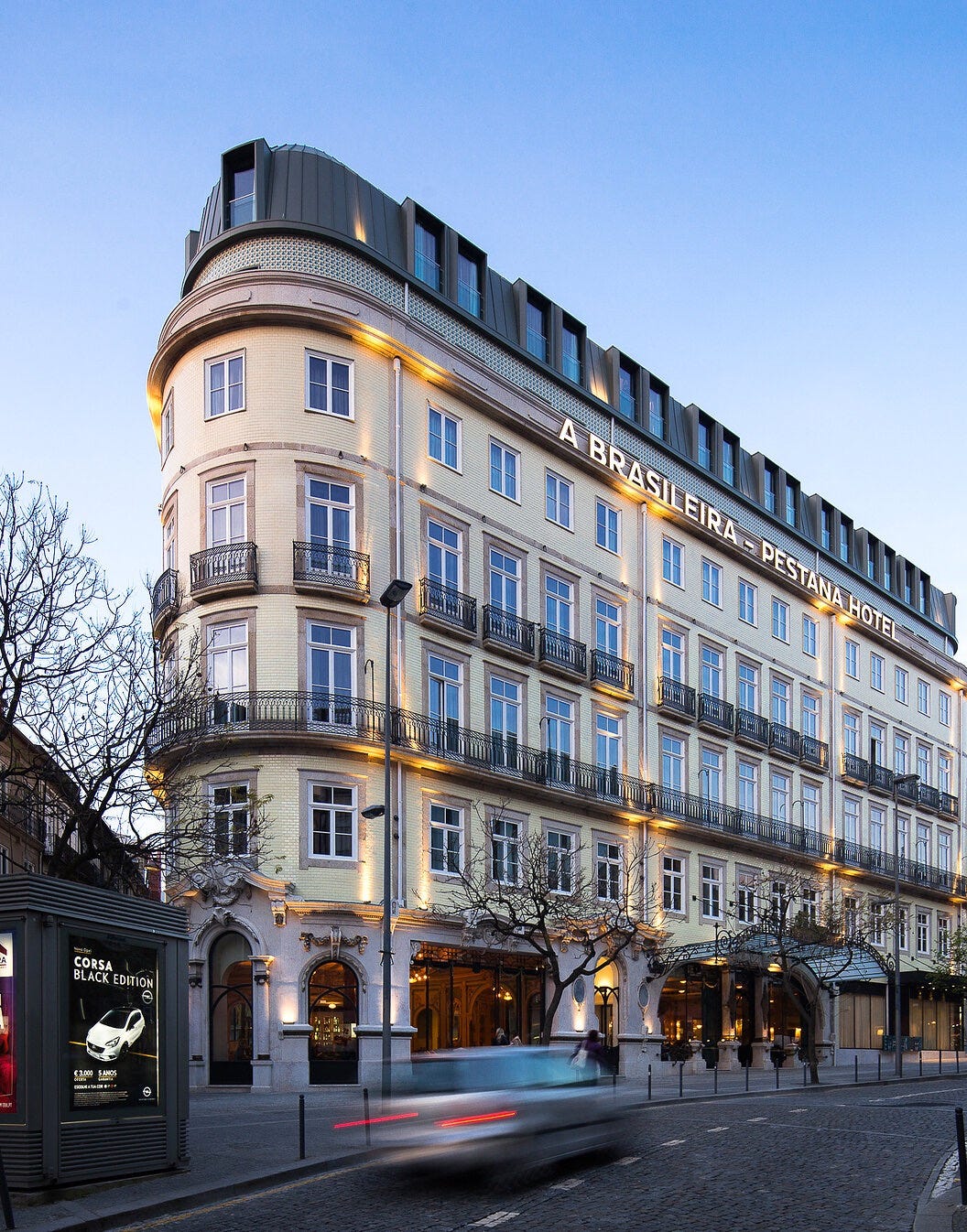
Methods of facadism, such as these, are an example of how developers circumvent regulations of heritage preservation and continue to build new structures to accommodate rising tourist demand. With facades intact, tourists are given the illusion of historic charm while still being able to enjoy their modern conveniences within budget, comfort, and willingness.
The very reason why Porto became such a sought-after destination, its historic charm, is the thing that risks being tainted. As tourism persists, cities like Porto will continue to reproduce themselves in the context of tourism consumption. They will continue to make local lifestyle adaptations to satisfy diverse visitor expectations. With that, how long can the identity of a historic site truly be preserved - even if it’s a UNESCO?
Will this be enough to satisfy the tourists moving forward??
As long as the pretty backdrop is there, there will be people engaging in the performance. But some people may start to catch onto the slight phoniness of it all. Especially when they look around and realize they’re neck to neck with a thousand other visitors emeshed in their screens, snapping pics, living it all through a lens… Long lines, overpacked viewpoints, unable to wiggle through the crowds or see anything they came to see.
Beyond just seeing a place for its aesthetic value, a yearning visitor needs to feel it, understand it, learn it. And I think it’s safe to say that most of us see the legitimacy in Debord’s societal critique, see how that applies to modern-day tourism, and understand that we desperately want to stray away from that reality. Nobody wants inauthentic relationships or experiences, especially as social media threatens to dominate our realities, and all of that is becoming a bit scary and unprecedented…
How to balance urban heritage and tourism
As far as solutions go for balancing heritage preservation, the best thing to do is to involve community members. Porto is doing this through voluntary workshops, bringing in key players into the discussion of new development and construction, especially when it is happening right in their backyard. Highlight and teach local, traditional practices as much as possible to visitors. Keep a true appreciation alive for the current local lifestyle as well as the historic fabric woven throughout the city. Enhance management and knowledge of impact, as Porto is also working on in its Tourism Strategy of 2027 framework and new Sustainable Tourism Observatories.
Each person’s interpretation of a historical site or culture will vary. As long as intentional education and curiosity are displayed within a visitor’s interpretation of a historical site, there can be potential for deep personal impact and enriched understanding.
Apart from heritage tourism serving as a potential threat to cultural authenticity, it is also crucial for funding the regeneration and maintenance of heritage sites. Without money from visitors, those sites may remain abandoned, lost, and mark the erasure of a once important cultural thread.
I think back to my own experience in Portugal and can confidently say I felt the most enriched and connected during my time at the guesthouse. Although you can make arguments for why that also is not the perfect, most sustainable type of tourist experience, I think what’s most important is that we always strive to strike a balance. Between our own traveling benefit, ensuring we get the most out of an experience, while ensuring the communities in which we are encroaching get the most benefit as well.
All while trying our best to live life as it is, genuinely, not through a screen.
Xoxo
That’s so interesting! I don’t remember Porto as touristy or inauthentic at all but last time I was there was 6 years ago - crazy how much things can change in such a short time!? Also didn’t know about the Pestana hotel. Hopefully Great read! Hopefully the village tourism initiative works since inland Portugal is basically empty.
Very thought-provoking post. I am currently working on something about how I like to travel without much research. Partially due to curated images and partly due to the fact that the places I've been, which I knew nothing about, had the most impact, as they were not competing with my preconceptions. Porto was one of the first places that showed me who it was (albeit a long time ago) and helped me develop this approach to travel. I might need to read up on Debord's critique of commodification and let it sit with your take on facadism for a bit.